
Birding in Bhuj and the Great Rann of Kutch – December 24th to 29th, 2013. by Jyotsna Sethi
8 Delhi birders set off for Gujarat on December 26, 2013 for this much awaited trip to Bhuj and the Great Rann of Kutch.
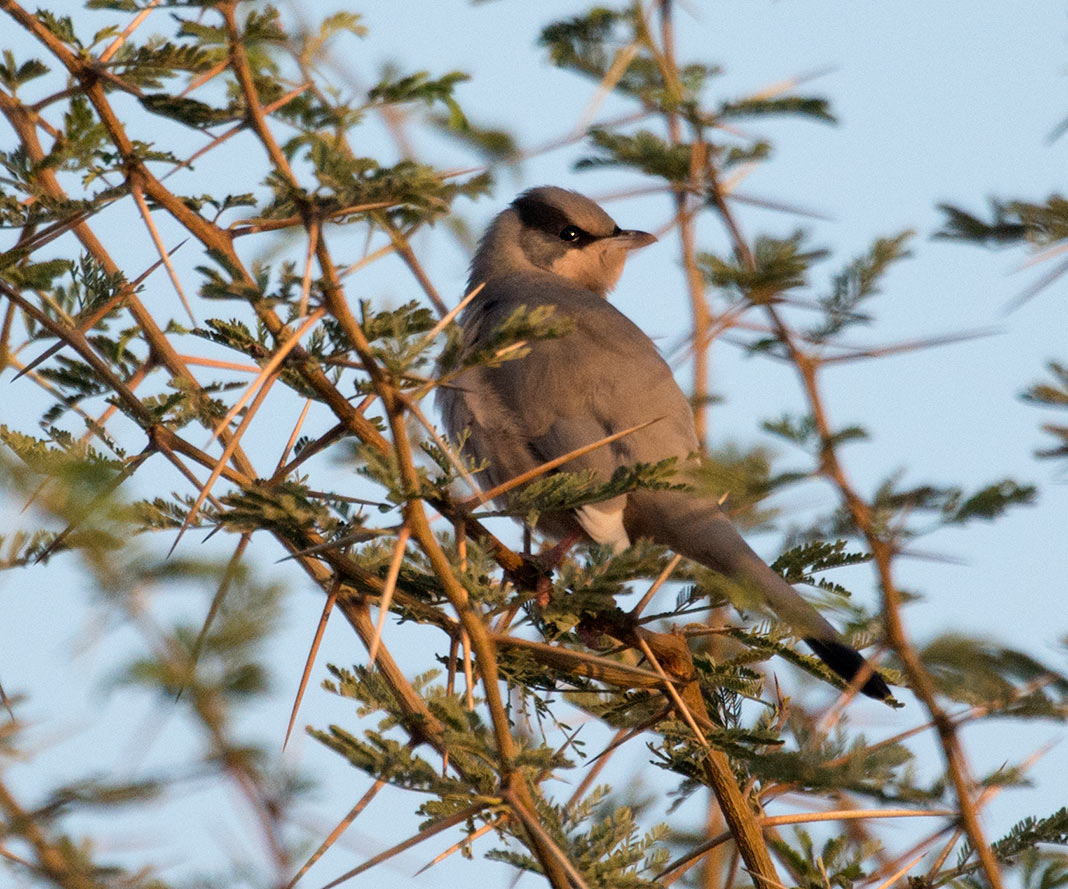
Day One in the Rann started with birding in the Pyoni thorn forest and we spotted one of the highlights of our trip almost immediately – the White Napped Tit. Set against the harsh backdrop of the thorn forest, this beautiful bird made a really pretty picture in the morning light. We also spotted a Marshall’s Iora, Grey Necked Buntings, Orphean Warbler, Straiolated Buntings and Grey Headed Buntings. Our next stop was at the Banni Grasslands, in the heart of the Great Rann of Kutch, where we sighted, observed and took photos of a flock of 18 Sociable Lapwings. We spent a considerable period of time with these rare and globally threatened birds and even saw them in flight. These birds are so shy that they would fly off if anyone even so much as opened the jeep door. The jeeps also had to keep a safe distance so as to not disturb the birds. We had evening tea while taking in a beautiful sunset and then waited for it to get dark so that we could observe and the study the stars and constellations in all their majesty over a vast landscape unbroken by any human construction. The bonus was sighting a pair of Skyke’s Nightjars afterwards.
Day Two was birding in Fuley village where we spotted a beautiful pair of Grey Hypocolius at sunrise. Mohammed, the local guide from Fuley, had been on the lookout for the movement of this rare bird and helped us to spot it. From Fuley we went to Chari Dhand and spotted several hundred common cranes many of them in flight in their beautiful formation and calling loudly. We also saw the Red Tailed Wheatear, Stoliczka’s Bushchat, doing its “puff and roll” display, and the Asian Desert Warbler among several other species.
Day Three took us to the Mandvi Coastline. It is hard to believe that in a country of 1.3 billion people, you can find miles of sandy beach with not a soul in sight, other than one or two fishing boats at some distance. The only other signs of some possible human life apart from eight of us Delhi birders on this vast coast were a few stings of drying fish and some fishing nets. Needless to say, birding here was spectacular. We were rewarded by sightings of Crab Plovers, Oyster Catchers, Palla’s Gulls, Heuglins gulls, Great Thick knees, Ruddy Turnstones, Lesser Sand Plovers, Kentish Plovers, Sandlings, Gull billed Terns, Curlew Sandpipers, Terrek’s Sand pipers, and Grey plovers among many others.
We made two visits to this beach, one in the morning and one in the evening to see birds in the amazing light of the setting sun. On our way in and out of Mandvi we stopped at a water tank on the side of a busy road because we sighted flocks of Spoonbills, Pelicans, Painted Storks, Little Stints, Grey Plovers, Black Ibises etc.
Day Four was a trip to Nalia to look for the Great Indian Bustard. After three initial days of excitement, this day was a bit of a disappointment and we returned disheartened at not finding what we went looking for. Just goes to show how close to extinction this highly endangered species is.
On the morning of Day Five the birders returned to Chari Dhand again to pay the Sociable Lapwings another visit. In the evening we visited natural rock formations on the Layari River Bed and saw another spectacular sunset in the Great Rann of Kutch. On our way back, in the twilight, we spotted an Indian Nightjar.
In the morning on Day 6 we visited the Fort Mahadev Thorn Forest for our last sighting of the White Napped Tit and the Marshall’s Iora. We also visited a nearby village to see Skyke’s Larks, Rufus Fronted Prinias and to our amazement, White Rumped Vultures that were nesting on a date palm in a village home. We returned to Virani Moti to pick up our bags and depart for Bhuj for our flight back to Delhi.
This was an intense birding trip. Overall, we sighted 147 species. But what made it an all round success was the comfortable stay, expert guides and good food all through out.
It was a great way to end 2013!
- Grey Francolin
- Indian Peafowl
- Indian Spot-billed Duck
- Northern Shoveler
- Gadwal
- Black-tailed Godwit
- Painted Stork
- Black-necked Stork
- Black-headed Ibis
- Red-naped Ibis
- Eurasian Spoonbill
- Pond Heron
- Grey HeronPurple Heron
- Cattle Egret
- Great Egret
- Little Egret
- Western Reef Egret – Dark Morph
- Dalmatian Pelican
- Little Cormorant
- Great Cormorant
- Darter
- Common Kestrel
- Red-necked Falcon
- Black-winged Kite
- Oriental Honey Buzzard
- White-rumped Vulture
- Egyptian Vulture
- Short-toed Snake Eagle
- Eurasian Marsh Harrier
- Montagu’s Harrier
- Pallied Harrier
- Shikra
- Eurasian Sparrow Hawk
- Long-legged Buzzard
- Greater Spotted Eagle
- Eastern Imperial Eagle
- Bonneli’s Eagle
- Steppe Eagle
- Common Crane
- Demoiselle Crane
- Eurasian Thick Knee
- Great Thick Knee
- Crab Plover
- Black-winged Stilt
- Eurasian Oystercatcher
- Yellow Wattled Lapwing
- Red-wattled Lapwing
- Pacific Golden Plover
- Grey Plover
- Sociable Lapwing
- Lesser Sand Plover
- Kentish Plover
- Greater Sand Plover
- Ruff
- Eurasian Curlew
- Whimbrel
- Common Red Shank
- Common Green Shank
- Green sandpiper
- Marsh Sandpiper
- Wood Sandpiper
- Little Stint
- Temminck’s stint
- Terek sandpiper
- Ruddy Turnstone
- Sanderlin
- Curlew Sandpiper
- Indian Courser
- Heuglins Gull
- Pallas
- Black-headed Gull
- brown-headed Gull
- Gull-billed Tern
- Caspian Tern
- Lesser Crested Tern
- Chestnut-bellied Sandgrouse
- Blue Rock Pigeon
- Red-collared Dove
- Eurasian Collared Dove
- Laughing Dove
- Rose-ringed Parakeet
- Hoopoe
- Asian Koel
- Sirkeer malkoha
- Rock-eagle Owl
- Spotted Owlet
- Syke’s Nightjar
- Indian Nightjar
- Barn Swallow
- Red-rumped Swallow
- Indian Roller
- White-throated Kingfisher
- Pied KIngfisher
- Green Bee-eaters
- Yellow-crowned Woodpecker
- Isabelline Shrike
- Southern Grey Shrike
- Small Minivet
- Marshall’s Iora
- Black Drongo
- Common Crow
- White-naped Tit
- Indian Bushlark
- Bimaculated lark
- Rufous tailed Lark
- Syke’s Lark
- Greater Short-toed Lark
- Crested Lark
- Ashy-crowned Sparrow Lark
- Grey Hypocolius
- White-eared Bulbul
- Red-vented Bulbul
- Rufous-fronted Prinia
- Desert warbler
- Desert White-throat
- Common Chiffchaff
- Orphean Warbler
- Lesser White Throat
- Asian Desert Warbler
- Common Babbler
- Common Myna
- Bank Myna
- Rosy Starling
- Brahminy Starling
- Pied Myna
- Blue Throat
- Indian Robin
- Black Redstart
- Stoliczka’s Bushchat
- Pied Bushchat
- Common Stonechat
- Isabelline Wheatear
- Red-tailed Wheatear
- Variable Wheatear
- Desert Wheatear
- Blue Rock Thrush
- Purple Sunbird
- House Sparrow
- Afghan – Perkini Sparrow
- Indian Silverbill
- White Wagtail
- Yellow Wagtail
- White-browed Wagtail
- Tawny Pipit
- Paddyfield Pipit
- Striolated Bunting
- Grey-necked Bunting
Recent Comments